In an exclusive interview with Embassy Comunicação, Ambassador Rachid Bladehane talks about the increase in the volume of exports, the construction of ports, the search for investments in the Brazil and the partnership with China.
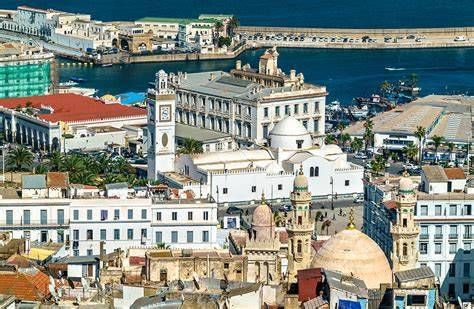
Algeria is the second most populous country in Africa and with a high development index.
It was recently the featured nation in the Arab-Brazilian Chamber of Commerce's "Market Opportunities" series. One of the leading producers of hydrocarbons. Algeria seeks to diversify the economy, with priority sectors to attract foreign investment such as metallurgy, household appliances and electronics, pharmaceutical, mechanical and automotive industries, among others. The volume of exports has quintupled compared to 40 years ago.
Among the investment and export opportunities for Brazilian companies in Algeria, the following stand out: food and beverages, chemicals, defense and medical-hospital. To expand foreign trade, Algerian President Abdelmadjid Tebboune decided to create a Superior Council of Exporters and build a new trading port.
According to Ambassador Rachid Bladehane, more than 1,300 investors are awaiting authorization to launch their projects, which will generate about 55,000 jobs in 18 months. According to the ambassador, trade between Brazil and Algeria is constantly growing reaching US$ 3 billion in 2022 and about US$ 2 billion by June this year. The target set for this year, namely $13 billion in non-hydrocarbon exports, has already been achieved." Thanks to the new economic policy, the volume of exports has quintupled compared to 40 years ago." Read the full interview with Ambassador Rachid Bladehane now.
1- Algeria is a prominent country in the event; Market Opportunities; an initiative of the Chamber
of Arab-Brazilian Commerce, with information from the Market Intelligence area of
Arab Chamber. What are the country's investment and export opportunities?
In answer to your question, I must say that Algeria is now a real opportunity for foreign companies, thanks to the new investment law. On Thursday, July 20, 2023, the President of the Republic, Abdelmadjid Tebboune, announced that China will invest 36 billion dollars in Algeria. Investments will cover a range of areas including industry, modern technologies, the knowledge economy, transport and agriculture. Algeria offers numerous investment opportunities. In a message to the Forum, President Tebboune invited Chinese operators to invest in Algeria, where they will find advantages and facilities.
The president's message is an appeal to Chinese operators, but also those of other countries, to invest in Algeria. There is no doubt that Algeria is a destination for investments in all sectors. Today, Algeria has several assets and advantages that make it a promising destination for investments in vital areas such as agriculture, energy, agri-food and pharmaceutical industry. Other areas in which foreign operators can invest include tourism, transport, services, renewable energy and infrastructure. This attractiveness (more than 1,300 investors are awaiting authorization to launch their projects, which will generate about 55,000 jobs in 18 months) is based on the decisions and measures taken by the authorities to release the initiative and pave the way for competition.
The aim is to ensure high levels of processing and to work to develop and exploit the full potential of the mining sector. The goal is to create a favorable climate for investment, based on efficiency and economic competitiveness. This goal involves encouraging entrepreneurship, the knowledge economy, startups, and the reform of the banking and financial system. With the advantages offered by Algeria's investment climate, it is fair to say that the way is now open for foreign entrepreneurs to establish partnerships and invest in all sectors in order to benefit from the facilities granted to economic operators.
2- What are the real benefits of the location of Algeria and its ports?
Due to its geographical position, Algeria is naturally a crossroads between Europe, Africa and the Arab world. It closely monitors economic developments around the world, and especially those affecting the African continent. To boost regional trade, the Algerian government decided to build a new commercial port at El Hamdania, near Cherchell. When completed, the port will connect Algeria to other countries in Africa, Europe, Southeast Asia and America. It will move 6.5 million containers and 26 million tons of goods per year. Similarly, Algeria plays an important and growing role in supplying energy to Europe, without leaving aside the highly promising North American market. In addition to the previous achievements, the country is committed to the implementation of large-scale projects towards Italy. To this is added the pipeline project to bring gas from Nigeria to Europe, offering investment opportunities for companies operating in the industry.
3- In this last year, what has changed in Algeria's trade relationship with Brazil?
Trade between Brazil and Algeria is constantly growing, usually reaching US$ 3 billion, but this year, in June, it has already reached about US$ 2 billion. In 2022, trade volume increased by about 16.6% compared to 2021, and totaled $.
3,100.879 million. For the period from January to May 2023, according to the Arab-Brazilian Chamber of Commerce, trade reached US$ 1,975,470 million. With US$ 1,030,399 million of Algerian exports against US$ 1,030,399 million of Algerian imports from Brazil.
Algerian exports recorded an increase of 196.0% compared to the same period in 2022. The main reasons for the increase in Algerian exports can be attributed to cement and rubber tires (products that have never been present in Algerian exports to Brazil). Algeria remains Brazil's third largest export destination among Arab countries and maintains second place as the country's largest supplier. The main products imported by Brazil from Algeria are hydrocarbons, fertilizers and cement, as well as tires and cement, as mentioned above.
4- How many Brazilian companies are headquartered or in the process of installation in Algeria?
As part of the implementation of economic diplomacy aimed at promoting non-hydrocarbon exports and foreign direct investment, WEG is investing in the electricity sector in partnership with CEVITAL, an Algerian private company. Rightly considered one of the first FDIs since the enactment of the new investment law, this $10 million investment, in partnership with Cevital, will initially produce 1,200,000 electric motors and create 100 direct jobs. WEG and Algerian Sonatrach, the largest company in the Oil and Gas segment in Africa, strengthen their relationship with the signing of an MoU in Algeria.
The company's CEO, Harry Schmelzer Jr., was in the country from May 31 to June 1, 2023 to sign the MoU, accompanied by Sonatrach CEO Toufik Hakkar. The MoU lays the groundwork for close cooperation between WEG and Sonatrach and priority areas of cooperation include energy efficiency, maintenance of electrical equipment, digitalisation and people development. Collaboration between the parties also emphasizes the development of local content, with the aim of identifying joint opportunities to develop local capacity and promote national integration. This strategic alliance will allow WEG to strengthen its presence in the Algerian market and bring its expertise and cutting-edge technological solutions to Sonatrach's projects. In
Sonatrach will benefit from WEG's experience and know-how to optimize its operations and increase its energy efficiency by providing innovative and environmentally friendly solutions. The signing of the MoU by the top executives of both companies attests to the commitment to strengthen collaboration in these key areas and the contribution to the sustainable growth of the industry in Algeria.
5- What is the importance of APEX support in the bilateral trade relationship?
Together with Algex, APEX can contribute to the development of trade. The creation of the National Agency for the Promotion of Foreign Trade (ALGEX), as part of a policy of expanding trade and global integration, aims to provide support for non-hydrocarbon exports. The Agency reports to the Minister of Commerce. It is clear that greater synergy between ALGEX and APEX could encourage more trade. There are three technical cooperation agreements in the handicraft sector with the Brazilian Agency of Cooperation (ABC) - which plans to spend US$ 2.6 million - on the processing of leather in Algeria, the transformation of rocks and minerals from the Sahara into handicrafts, precious stones and jewelry, the development of strategies to increase the production of jewelry in the cooperative Tertit N Ahhagar in Tamanarasset, signed in September 2022, is a 4th draft agreement on the capo of ecotourism.
6- The President of Algeria, Abdelmadjid Tebboune, recently announced the installation of the Supreme Council of Exporters, when he celebrated the increase in exports? Will this council expand trade with Brazil?
The President of the Republic, Abdelmadjid Tebboune, has decided to create a Superior Council of Exporters as soon as possible, with the aim of improving the way his concerns are handled. Of course, this institution will help strengthen trade with all countries in the world, including Brazil. The decision was also taken to accelerate the process of opening free trade zones in several wilayas bordering neighbouring countries (Mauritania, Mali and Niger). These countries share a tradition of freedom trade in agricultural products with Algeria since 1962. In addition, steps have already been taken to open shipping lines with Mauritania and Senegal to support continental trade and domestic exports, with the planned opening of national banks in several African capitals.
All this is part of the State's concern to provide continuous support and assistance to wealth-generating economic operators, especially exporters, whom we consider ambassadors of the national economy; Emphasized. Non- hydrocarbon exports did not exceed 3% of total exports in 2018 and 2019. Today, they stand at 11% and could increase to between 16% and 22% by the end of 2023 or early 2024. The target set for this year, namely US$ 13 billion in non-hydrocarbon exports, has already been achieved.
Our exports are getting stronger and stronger. Thanks to the new economic policy, the volume of exports has quintupled compared to 40 years ago. These major achievements in exports, investment and the knowledge economy are based on an integrated global approach to developing the economy and improving the business climate. Algeria has entered a new phase marked by a policy of innovation, far removed from the logic of the rentier economy, which kills the spirit of initiative and is based on dependence on a barrel of oil. We are optimistic about the potential of Algerian companies in the field of export, where the role of startups is becoming more important every day. We are also clearly optimistic about the positive dynamics of export activity in our country, which should boost investment and industrialization, creating wealth and jobs and increasing the country's GDP.
7- The president also spoke about the opening of new air routes in Algeria. Has there been any progress in this direction?
In fact, in July 2023, new air routes will be opened serving major African capitals in order to directly connect Algeria and the African continent; so that Algeria does not turn its back on Africa; This increase in air services is in addition to those already in operation (Canada, China) and those that have been decided recently (Caracas). However, the ultimate goal of the Algerian authorities is to transform our country into an international center, given its privileged geographical position. Algeria is also working to consolidate its presence in Africa, mainly through four genuine African integration projects. They are the project to connect fiber optics with Niger and Nigeria, the Nigeria-Europe gas pipeline that passes through Niger and Algeria, gas exploration in Niger and the railway line that will connect Algiers to Bamako and Niamey.
One of the main producers of hydrocarbons, the People's Democratic Republic of Algeria seeks to diversify the economy, with priority sectors to attract foreign investment such as metallurgy, household appliances and electronics, pharmaceutical industry, mechanics and vehicles, among others. Among the investment and export opportunities for Brazilian companies in Algeria, the following stand out: food and beverages, chemicals, defense and medical-hospital.